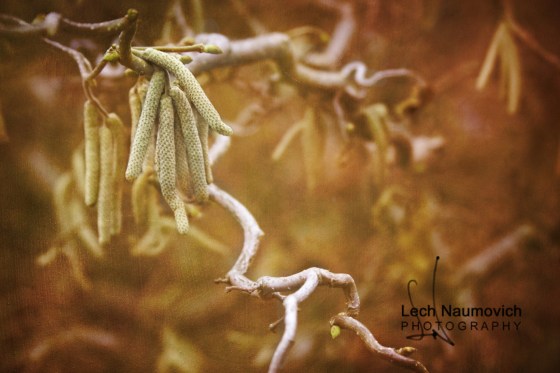
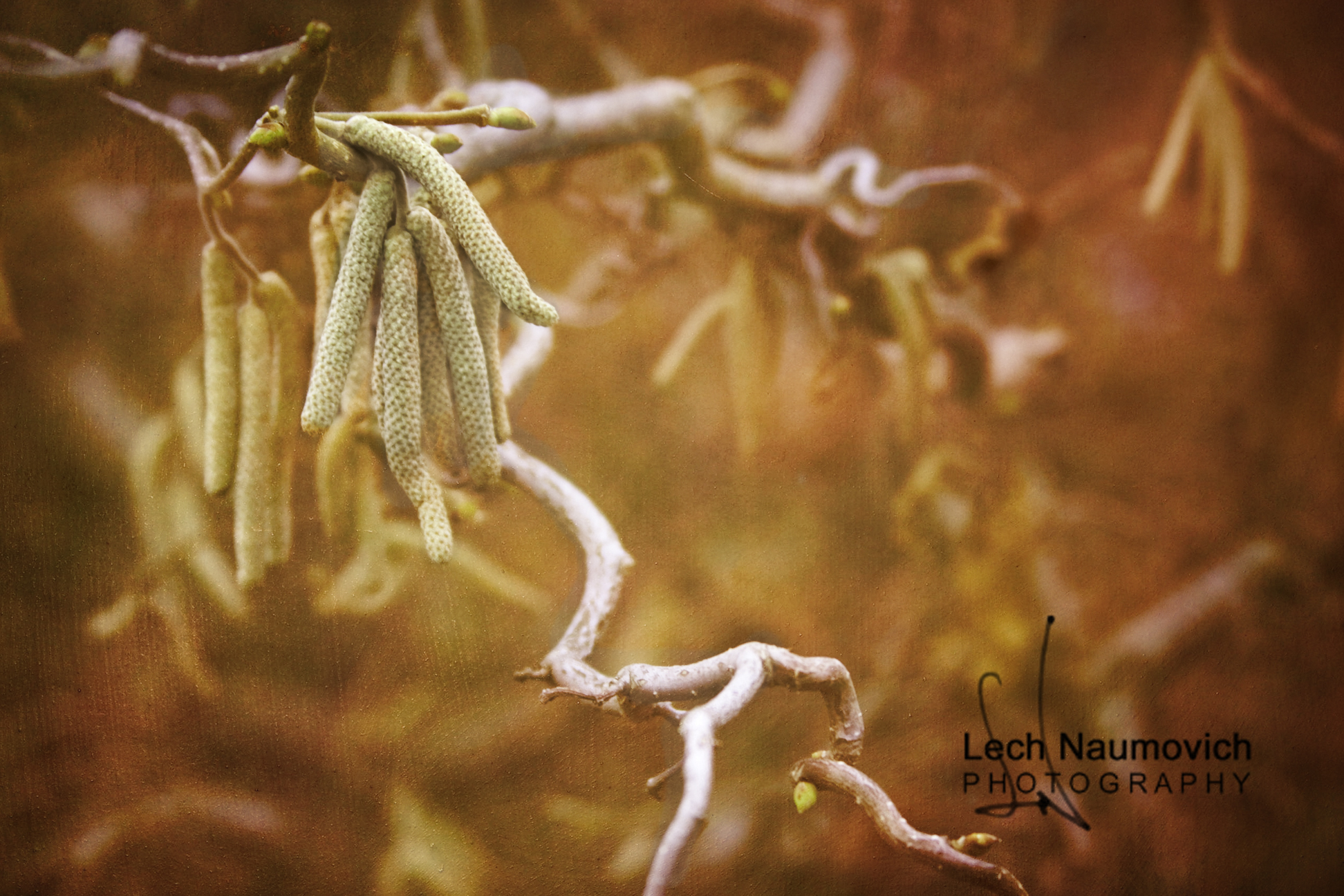
The catkin. A harbinger of spring. Here are a cluster of male catkins on a hazelnut (Corylus contorta to be sure). Native hazelnut catkins are known to be especially important for the ruffed grouse who use these as an early spring “power bar”. More than a snack, these foods catapult the grouse from a season depauperate of food into a season of more abundant food. The catkins are a light at the end of the tunnel.
Click on picture for a larger image.
Notably, Native Americans were known to use Corylus americana medicinally for hives, biliousness, diarrhea, cramps, hay fever, childbirth, hemorrhages, prenatal strength, and teething, to induce vomiting, and to heal cuts (D. E. Moerman, 1986). This is truly a plant whose beauty, nourishment and healing help demonstrate how rich of a world it is that we live in.
So what did I do here to “museum finish” this piece… Continue reading →









 Lech Naumovich Photography